
Chromium for Blood Sugar: What the Trials Actually Tested
A trace mineral with a real role in glucose handling and a weaker record as a supplement. The difference comes down to dose.
Read the article →Eight plain-language articles behind the Olivaro ledger, each tied to its sources.
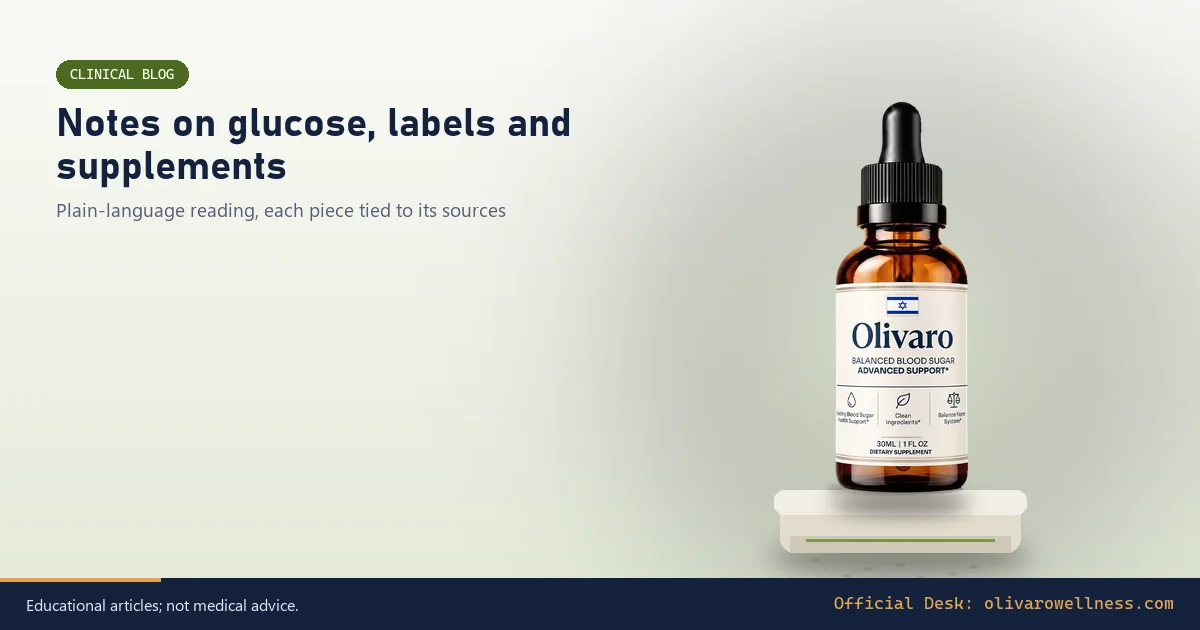
Short, sourced articles on the topics behind a glucose-support supplement: what the ingredients do at real doses, how to read labels, and how to stay safe with medicines and pets. None of them is medical advice; each links to the studies and agency pages it relies on.
A trace mineral with a real role in glucose handling and a weaker record as a supplement. The difference comes down to dose.
Read the article →A real, demonstrable effect on the tongue, a modest record for glucose, and a popular claim that outruns the evidence.
Read the article →Some ingredients nudge glucose in trials. The size of the nudge, and the dose it needs, decide whether a product can deliver it.
Read the article →The gut hormone, the drugs built from it and the supplements that borrow its name are three very different things.
Read the article →Most supplement problems with diabetes drugs are predictable. Here is what to watch and a safe routine for adding anything new.
Read the article →One number for many ingredients. A two-minute calculation tells you most of what the label is not saying.
Read the article →Fasting readings are the number most people track. Understanding why they run high makes them far more useful.
Read the article →Harmless for people in supplement amounts, dangerous for dogs in small ones. A label check every pet owner should make.
Read the article →Checkout happens on the vendor's BuyGoods page. Note a week of morning readings before the first dropper; if the numbers have not moved by day 50, write to the vendor while the refund window is still open, opened bottles included.